In the days that followed the September 11 attacks our soundscape changed. The ever-present thrum of aircraft was silenced, and the shift was eerie and uncomfortable. I had never realized how many airplanes I could hear even when they weren’t visible. They had just always been there and suddenly the world sounded wrong. A few days later the planes returned, and I felt a little less on edge.
I think it was this realization that the world could sound off kilter that made me start paying more attention to bird songs and how they affected me. The alarm calls of white-crowned sparrows and house finches would make me flinch and examine my surroundings. I was in no danger, but something in my amygdala told me to take heed. Then I realized that it wasn’t the calendar that convinced me the seasons were changing, it was the shift in the soundscape.
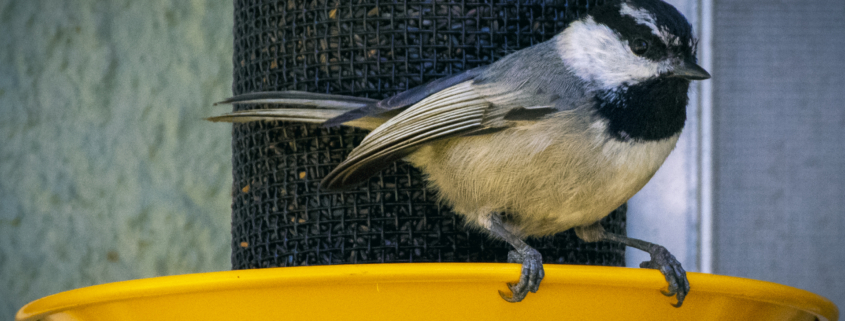
When the summer is finally winding down, the mountain chickadees come down from the San Jacinto Mountains to the lower elevations like mine in Banning, adding their song to the mix. Chickadees have dialects and sing slightly different songs depending on their region. I’ve always thought mine sounded like they were saying, “trick or treat.” In fact, I heard one this morning, just two days before October and smiled. Autumn is coming and with it fall migration.
The research has been mounting on how birdsong and the diversity of bird species boosts our well-being. A study published in 2022 utilized a smartphone app called Urban Mind to track the impact of seeing or hearing birds on users. Over the course of 3 years, a sample of 1,292 participants over 26,856 self-reported experiences showed that these encounters increased feelings of wellbeing. This boost in mood occurred in both healthy people and those with a diagnosis of depression. The researchers suggested that visiting natural spaces with a high degree of birdlife could play a role in better mental health.
More research needs to be done, but I think most birders would agree that seeing and hearing a variety of bird species brings them peace and even joy. If you are interested in exploring if birds could elevate your mood as well, October is a wonderful time to get started. Most birds pass through California from early September through October and the soundscape is changing as well as the birds you might spot in your neighborhood or local park.
In October, we begin to see the raptors migrating into the region. Juvenile red-tailed hawks and peregrine falcons arrive on their first migration and some years it seems as though there is one or the other on every pole along the roadway. Waterfowl migrating along the Pacific Flyway arrive in wetlands and a parade of species heading for Mexico and South America pause to fuel up for the rest of their journey.
If you want to know what species are in the area, especially the small hard-to-spot birds like warblers, the Merlin app by Cornell Lab is an excellent tool. The app can record the birdsong around you and pinpoint the songs and calls of different species within the mix. You might be surprised how many species of birds surround you.
There are also tools to see when the migration is peaking. Most birds are nocturnal migrants and some are only stopping over for a day or two to fuel up. BirdCast.info provides information on what species to look for, how many birds crossed over the region and heat maps for the highest activity around the country. Even if you do not become a dedicated birder, perhaps the hunt for feathered treasure could boost your spirits.
In the years that have followed the September 11 attacks, I have often thought about what it would be like if the birdsong disappeared. It was perhaps Rachel Carson who imagined it first in her 1962 book Silent Spring, but it remains a chilling thought.
According to Audubon, California is home to nearly two-thirds of the bird species in North America with approximately 450 species. We couldn’t live in a better place to enjoy the health benefits of spending some time with the birds and I hope this will always be true.
Rivers & Lands Conservancy connects our community to natural, wild, and open spaces of Southern California through land conservation, stewardship, and education.
Rebecca K. O’Connor is the Co-Executive Director of Rivers & Lands Conservancy, has an MFA in Creative Writing from UC Riverside and is the author of several books on the natural world
Research Article: https://www.nature.com/articles/s41598-022-20207-6#Sec19

 Like Us on Facebook
  Find Us on Instagram
