
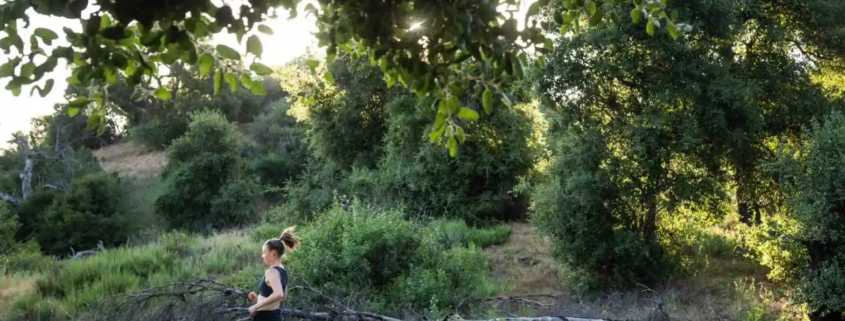
An invasive tree pest is threatening oak trees across Southern California and reshaping our historic landscapes.
Oak trees have forever defined this region, offering shade, habitat and a sense of place for those who spend time outdoors. However, in recent years, naturalists have noted signs of die-back in some locales. The culprit is the goldspotted oak borer (GSOB). This small but destructive invasive beetle has emerged as one of the most serious threats to oak woodlands in the region.
In January of this year a new outbreak of GSOB was noted in Calimesa within Rivers & Lands Conservancy’s (RLC) Cienega Canyon Preserve. During a routine site meeting, Dr. Chris McDonald of University of California Agricultural and Natural Resources department (UCANR) noted some oak trees showing signs of die-back. After a quick inspection and a second opinion from GSOB experts at CAL FIRE, it was confirmed that the pest was present just 5 miles southwest of the closest noted population in Wildwood Canyon.
Native to southeastern Arizona, the beetle was first detected in San Diego County in the early 2000s. It has since spread into Riverside, Orange, Los Angeles, San Bernardino, and Ventura counties. This is deeply concerning to scientists, land managers, Tribal communities and conservation groups working to protect California’s oak ecosystems.
The beetle primarily targets three oak species: coast live oak, canyon live oak and California black oak. The destruction is a result of their natural life cycle. Adult beetles lay eggs in the crevices of the bark, and when the larvae hatch, they burrow into the tree trunk to feed on the outermost part of the trunk called the cambium layer. In this process they damage the tissue responsible for transporting water and nutrients, weakening the tree over time. When the larvae mature into beetles, they emerge through small, D-shaped exit holes and can fly up to 10 miles to infest new trees.
Since much of this damage happens out of sight, early infestations are difficult to detect. By the time notable symptoms appear such as thinning canopies, bark staining and exit holes, the tree is deeply compromised. Ultimately if left untreated, GSOB will kill the trees.
Through funding from CAL FIRE, Inland Empire Resource Conservation District (IERCD) is supporting RLC and other landowners to survey, remove and treat infested trees at Cienega Canyon Preserve and nearby areas. These surveys assess damage from the beetle and identify which trees need removal and which can potentially be saved.
So far almost 400 trees have been surveyed in Calimesa and Beaumont, but only 7 of the identified GSOB-infested trees are deemed too far gone to be saved. These highly infested “amplifier trees” are hotspot breeding zones for GSOB. The most effective way to prevent GSOB from spreading is to cut the infested tree down into manageably sized logs and then chip it into pieces smaller than one inch. This process is shown to eliminate 95% of the GSOB infestation.
Treating heavily infested oaks is important as the ecological consequences of infestations extend far beyond each individual tree. Widespread oak mortality disrupts ecosystems, reducing biodiversity and critical wildlife habitat. Dead and dying trees also increase dry fuel loads, heightening the risk of intense wildfires, particularly during periods of drought and extreme heat.
Aside from removing infested trees, we can do more to prevent the spread of GSOB. Jocelyn Perez, IERCD Forest Ecologist, explained alternatives to tree removal can include debarking them. “This is a good option for landowners that want to use their hardwood. Once it’s been debarked, the remaining wood is safe to use since GSOB does not bore into hardwood. For infested trees that are in remote areas away from roads where driving a chipper is not feasible, wood can be enclosed in a fine metal mesh to trap emerging adult beetles from infesting other trees.”
Perez invites the public to engage as well. “The more eyes we have looking for GSOB, the better. I encourage people to participate in a GSOB Blitz organized by UCANR; anyone can learn to identify GSOB and collect data in the field. The public can contribute to survey efforts in other ways, like uploading a picture of a suspected exit hole to iNaturalist.”
Despite these efforts, challenges remain. Long-term success will depend on consistent monitoring, responsible land management and widespread awareness. Spread the word to buy firewood where you plan to burn it. Transporting infested oak firewood is likely a significant pathway to spreading GSOB to non-infested areas.
By the time a towering oak shows signs of decline, the real story has already been unfolding beneath the bark. And a happy ending to this story depends on the community working together before it’s too late.
Amy Tims is a land steward with Rivers & Lands Conservancy and has a B.S. in conservation biology with a focus on Native American & Indigenous Studies from UC Davis.
Rivers & Lands Conservancy connects our community to natural, wild, and open spaces of Southern California through land conservation, stewardship, and education.