For a long time, I didn’t think of myself as an “environmental person.”
I grew up in LA County in a family that enjoyed the outdoors in small ways. My parents loved gardening. My dad grew fruits and vegetables. My mom filled the yard with succulents. Nature was around me, but it was never something I thought deeply about. I recycled for the money, and I didn’t question much beyond that.
And sometimes, I made the wrong choice.
One afternoon in high school, I finished a water bottle and couldn’t find a nearby trash can. I looked around, shrugged, tossed it into some bushes, and laughed like it was harmless. However, my friend didn’t laugh.
She stopped, stared at me, and reprimanded me about how wrong I was. She reminded me that one bottle doesn’t just disappear; it can blow into a storm drain, reach local waterways, and harm wildlife long after we forget about it. She then walked back, pulled the bottle out, and carried it with her until we found a trash can.
It was a small moment. It lasted maybe 30 seconds. But it changed something in me. Someone I trusted showed me that small actions count. Even the ones we think no one sees.
Years later, when I started working with Rivers & Lands Conservancy, I felt that same sense of being out of place. My coworkers could name plants and birds on sight. They answered public questions without hesitation. I stood there thinking, “How do they know all this, and how will I ever catch up?” I felt intimidated, behind, and wondered if I belonged.
Then I realized something simple. They learned it. So could I. Caring for the environment doesn’t start with a degree or a title. It begins with paying attention. You can start almost anywhere. Visit a place like Cienega Canyon Preserve, stop by one of our community California Native Gardens in Riverside, or just look around your own block.
Engagement can be minor and routine. Pick up trash when you see it. Keep your friends accountable, as mine did for me. Download a free app like Merlin Bird ID or iNaturalist and start naming the birds you hear singing in trees or the plants you see growing through sidewalk cracks. You can follow local groups online to learn about native species or help at one of their weekend volunteer day. None of this requires expertise. It just requires curiosity.
Those apps became some of my favorite teachers. I started identifying birds and plants while out with friends and family. At work, my coworkers would quiz me on species. Sometimes I get them right. Sometimes I don’t. Either way, I walked away knowing more than I did five minutes before.
After a few months, I noticed I was answering questions too. I recognized native plants on hikes. I shared fun facts with friends and family. The things that once felt intimidating started to feel familiar. I realized environmental science is not something you are born knowing. It’s something you practice.
The most knowledgeable people I work with are not the loudest or the most certain. They are the most curious. They are comfortable saying “I don’t know” and then figuring it out. They enjoy learning. That’s what belonging really looks like.
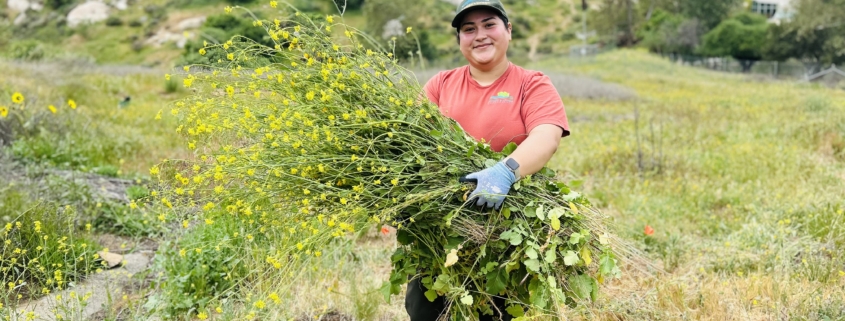
At Rivers & Lands Conservancy, that learning happens side-by-side. Volunteers join us on guided hikes and restoration days. Staff explain what we are planting and why. Questions are always welcome. You learn with your hands in the soil and your neighbors next to you. It feels less like a classroom and more like a group of friends caring for the same cause.
And it makes a difference. Habitats get restored. Trails get cleaner. Kids start recognizing the wildlife around them. One person shares what they learned with a friend, and that friend passes it on. The impact spreads quietly like rippling water. All because someone decided to start.
You don’t need a science degree to care for the environment. Small actions, curiosity, and a willingness to learn can help anyone make a meaningful impact in their community. Now take the first step outside and see what you can discover.
Angie Leon is the Community Programs & Fundraising Assistant at Rivers & Lands Conservancy and has a B.S. in Business Administration and Management from California Baptist University.
Rivers & Lands Conservancy connects our community to natural, wild, and open spaces of Southern California through land conservation, stewardship, and education.